Research projectIrrespective of the field of study, a model is an abstract representation of the reality observed, scaled down, and converted to a form that is easy to understand. It is also a spatio-temporal reference for our understanding of a system [1]. Agent-based models (ABM) and spatial models in Geographic…
Research project
Irrespective of the field of study, a model is an abstract representation of the reality observed, scaled down, and converted to a form that is easy to understand. It is also a spatio-temporal reference for our understanding of a system [1]. Agent-based models (ABM) and spatial models in Geographic Information System (GIS) have proven to be useful tools for land use change processes analysis as they provide a framework to build models and conduct simulations.
On the one hand, GIS is a set of computer-based infrastructure, human resources, procedures, and standards for the management of geographical information to address a specific issue [2]. GISbased models are composed of spatial entities including points, lines polygons, or pixels. On the other hand, ABM allows to define the behavior of agents in a common environment for solving complex problems. It is also used to model a distributed computing system with autonomous interacting agents that coordinate their actions to achieve their goal(s) jointly or competitively [3]. There are obvious similarities between agents and objects which usually prompt the designer of an ABM to rely on Unified Modeling Language formalism [4]. Both spatial and agent-based approaches include computer simulation platforms often used in several research fields (economics, ecology, sociology, geography, etc.) to develop models for explaining and analyzing complex phenomena [5], [6].
Several authors including [7]–[10] have proposed such models to understand the drivers of land use change and identify appropriate actions to maintain the target system. In interdisciplinary contexts and participatory modeling situations, there is an increasing need to rapidly build more realistic or effective models to solve environmental problems.
The key idea to achieve this is to rely on field knowledge to mimic the attributes and behavior of the entities involved. Different research directions are investigated to increase the realism of the simulated environment. The first group of notable efforts oriented toward the integration of GIS and agentbased models can be seen in [11], [12]. Other efforts are oriented toward proposing appropriate agent architecture. In this regard, exploring the concepts of the actor paradigm to build effective and valid agent is a promising research pathway [13], [14]. In addition to computer and mathematical modeling (e.g. using ordinary differential equations [15]), agent design can rely on economic, social, and anthropological models [16].
The challenge of our research endeavor is to combine actor paradigm, agent architecture, and spatial concepts to develop effective models for addressing key environmental problems. The ad-hoc approach is often used for model development, which relies on a code-and-fix life cycle, going from a prototype model through progressive refinement. However, this adaptive approach does not capture systematically actors’ knowledge and their interactions with the environment.
Technically, the development and maintenance of resulting models become cumbersome and time-consuming. From these facts, the actor paradigm appears to be a promising research focus in ABM as it links actor concepts to those of an agent and therefore improves the realism and validity of each model built. Moreover, to cope with a world evolving toward more applied artificial intelligence (AI), we need a more efficient and simple approach as close as possible to fields actors and appropriate for non-computer scientists that allows to capture the reality, data, and behavior shared within an interdisciplinary community and then, an efficient modeling technique to produce valid ABM simulations. In this article, we propose an actor-oriented and architecture-driven approach called Spatially Explicit Agent-based Modeling Approach (SEAMA) which relies on relevant existing methods and satisfies the need to design and build spatially explicit agent-based models that adequately mimic reality. We have designed an Agent Global Experiment (AGE) framework incorporating a meta-model built from actor, agent, and spatial concepts to produce an initial model from specifications provided by domain experts and system analysts.
Lien de l'article publié : click here
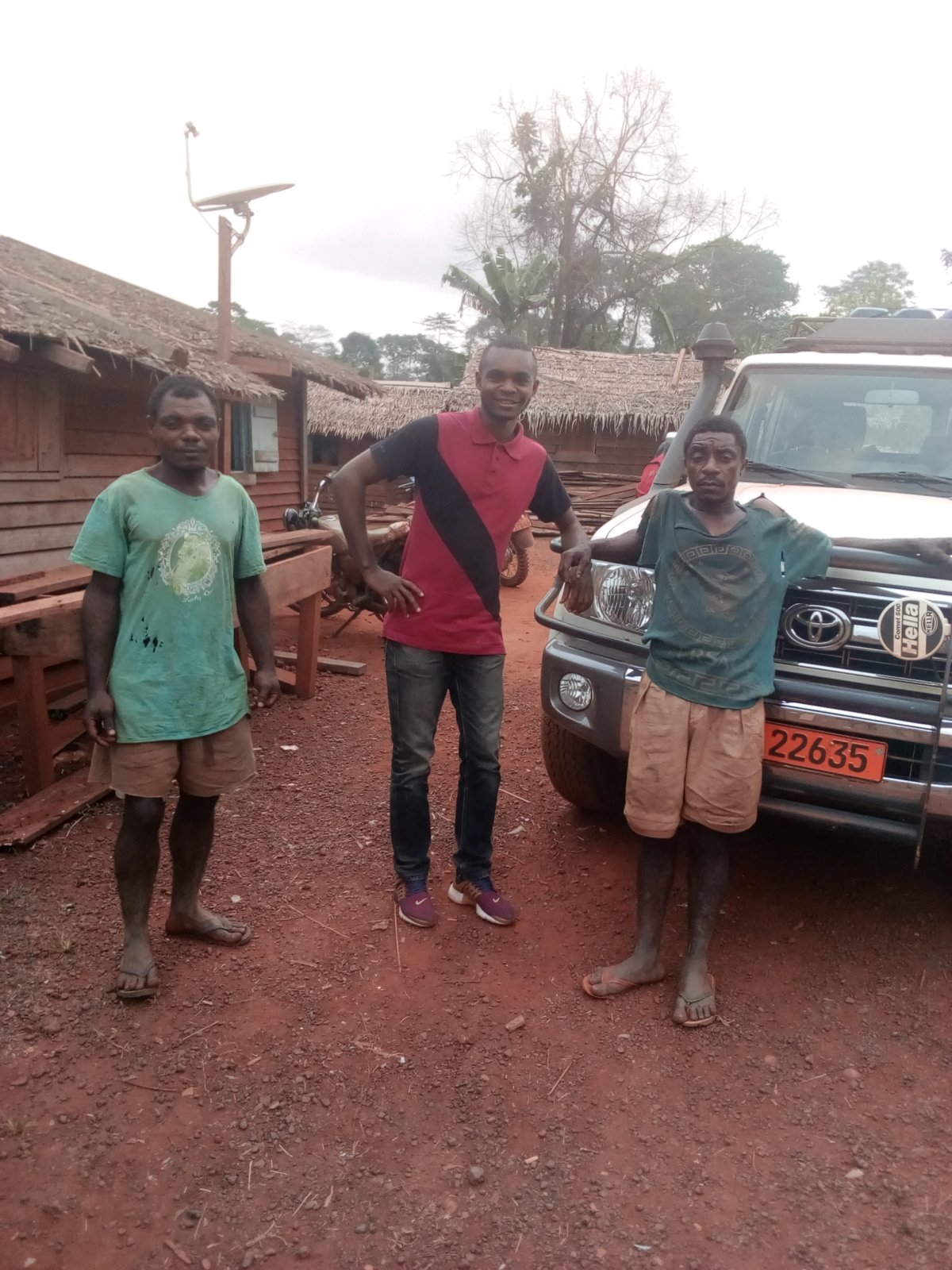
Image sur le terrain avec les habitants dans la régions de l'Est:

 ★
★